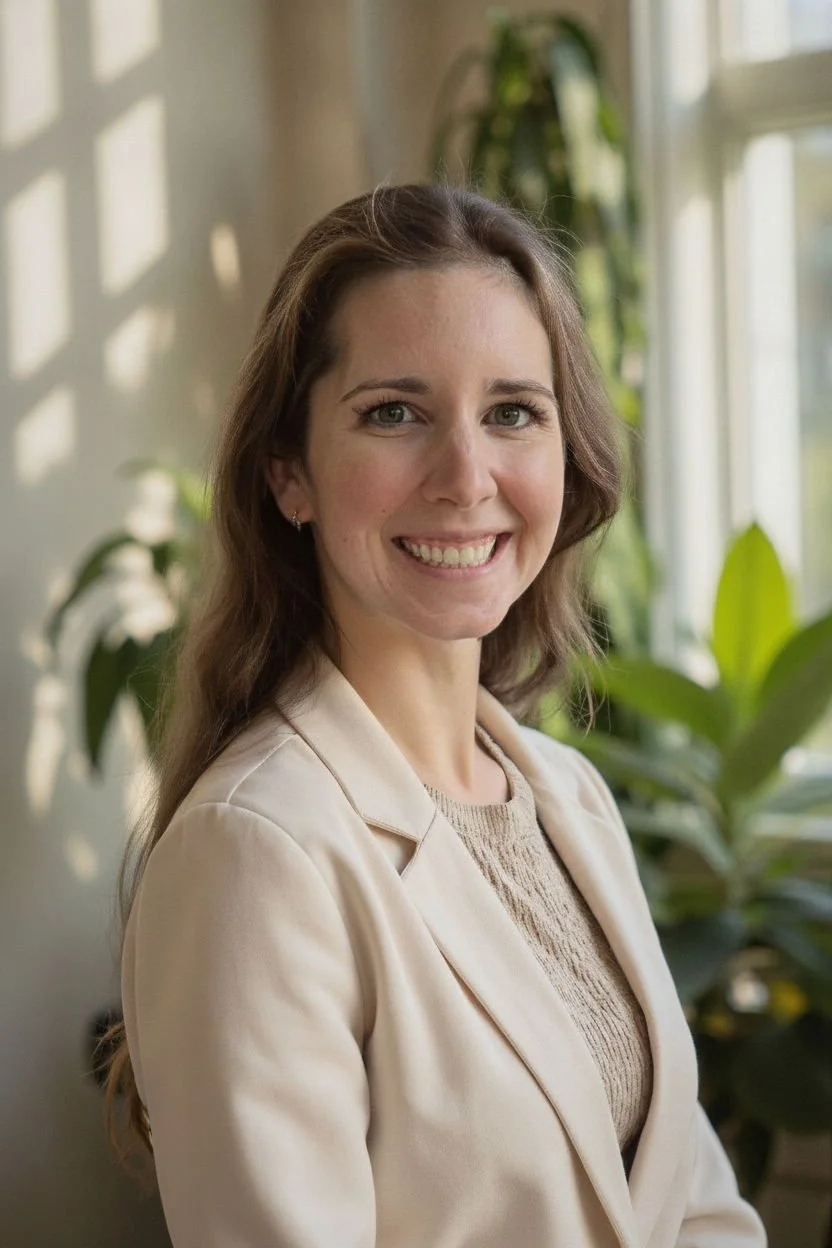
Dr. Brianna Eickmeyer did not arrive at medicine through ambition alone. She arrived through her own body.
She got sick in her late teens — a constellation of symptoms that wandered and shifted and resisted clean diagnosis. Fatigue that wasn't ordinary fatigue. Joint pain that moved without injury. A thermoregulation system that had stopped working. A body that was clearly trying to communicate something that the medical system, at the time, did not have language for. She was tested, referred, occasionally dismissed, and in one instance told she was lying about her own experience by a provider who had not yet received the test results that would prove her right.
She was not lying. She never was.
What she was, was a teenager with a body that was speaking in a language no one around her had learned to listen for. It would take years — and eventually a physician who did something radical, who listened to the whole story and looked at the whole picture instead of sorting her symptoms into separate specialist offices — before things began to change. That doctor put her on a gluten-free, soy-free, all-organic diet before it was culturally mainstream, before it was easy, because it was right. She identified the mitochondrial dysfunction. She treated the patient in front of her rather than the textbook version of a patient.
Dr. Eickmeyer has carried that physician in her practice every day since.
"I spent years being a patient before I became a physician. That changed everything about the kind of doctor I became — and the kind I intend to keep being." — Dr. Brianna Eickmeyer
Long before she had the credentials, she had the education — the kind that comes from living inside a body that doesn't work the way it should and having to fight to be believed. She took that with her to Baylor University in Waco, Texas, mailing frozen meals packed in dry ice from Washington because there was no other way to eat within the constraints of what her body could tolerate. She graduated Magna Cum Laude with honors, earning a Bachelor of Science in Biology with a Health Concentration, a double minor in Chemistry and Medical Humanities, and a thesis defense that received the highest marks possible.
She went on to earn her Doctor of Naturopathic Medicine from Bastyr University in Kenmore, Washington, where she developed an extensive clinical focus in gastroenterology — the system she had spent years learning about from the inside.
Her clinical work began in integrative primary care, and she has spent years seeing patients across gastroenterology and primary care at naturopathic clinics in the Pacific Northwest, including her own practice. She is a licensed naturopathic physician in Washington State and a member of the Gastroenterology Association of Naturopathic Physicians.
In 2025, she co-authored the third edition of Natural Approach to Gastroenterology: Upper Gastrointestinal Tract and Pancreas alongside Dr. Eric Yarnell — an 859-page clinical reference fifteen years in the making, with 315 tables, 134 illustrations, and over 7,600 references. It is the most comprehensive naturopathic gastroenterology textbook in the field. It is also, in some sense, the professional answer to a personal question she has been asking since she was a teenager: what is actually going on in this body, and why does it matter?
She is now channeling everything — the years of being a patient, the years of being a clinician, the textbook, the clinical trenches — into educational work for patients and the curious public. The newsletter, the webinar series, and the projects ahead are all built around one belief she has held since the day a physician finally listened to her whole story:
Understanding your body is not a luxury. It is the foundation of everything that comes after.
"The first thing I say to a patient whose symptoms don't fit the textbook picture is: I believe you. Because I know what it feels like when someone doesn't." — Dr. Brianna Eickmeyer